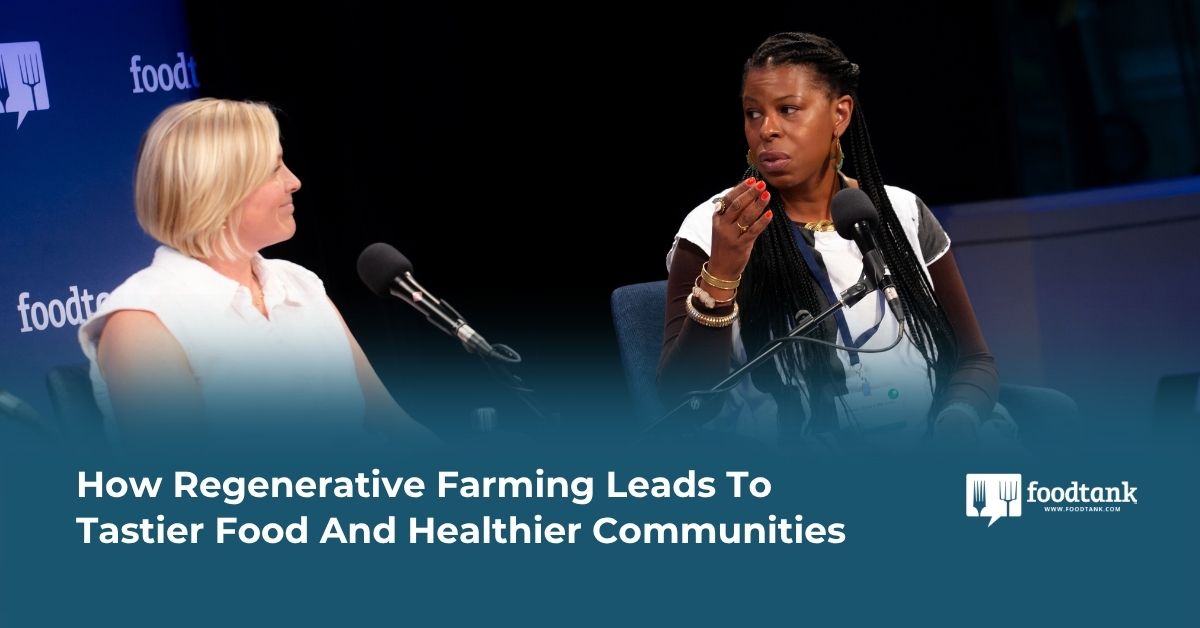
At a recent Food Tank Summit held during Climate Week NYC, a diverse group of ranchers, scientists, and chefs gathered to argue that the path to global health begins beneath our feet. The central theme was clear: there is an unbreakable chain connecting soil health to human longevity. Panelists emphasized that farms act as the connective tissue binding agriculture, nutrition, and medicine together, suggesting that the way food is raised directly dictates its nutritional density and the ultimate well-being of those who consume it.
Heidi Diestel, a fourth generation farmer at Diestel Family Ranch, noted that everything is grounded in the soil, while cardiologist Dariush Mozaffarian added that the link between regenerative practices and nutrient dense food is rooted in science rather than theory. According to Mozaffarian, pasture raised livestock and regeneratively grown crops often possess superior nutritional profiles. This shift in thinking moves the conversation away from broad questions about whether certain foods should be eaten and toward a nuanced understanding of how they are produced. Paul Lightfoot of Patagonia Provisions pointed out that not all beef is created equal, highlighting why production methods matter as much as the ingredient itself.
However, bridging the gap between the field and the fork requires better data and communication. Experts like Nile Nair from the Periodic Table of Food Initiative explained that new molecular tools now allow researchers to identify vital nutrients that never appear on standard nutrition labels. Despite this scientific progress, speakers warned of a rising tide of food system illiteracy fueled by social media algorithms. While consumers are increasingly seeking out high quality food for personal wellness reasons because they are tired of being sick, many still do not realize that their own physical health is mirrored by the health of the planet’s ecosystems.
Ultimately, building a resilient future depends on bringing farmers back into the center of the conversation and shortening the distance between producers and consumers. From community gardens in San Antonio providing free produce as medicine to economic shifts in countries like Zambia, the goal is to create a sustainable loop of nourishment. As Jason Diestel summarized it, stewardship is about leaving a legacy where we recognize that what we feed the soil eventually feeds ourselves. In this view, agriculture isn’t just an industry but one long chain where every single link determines whether a community thrives or falters.