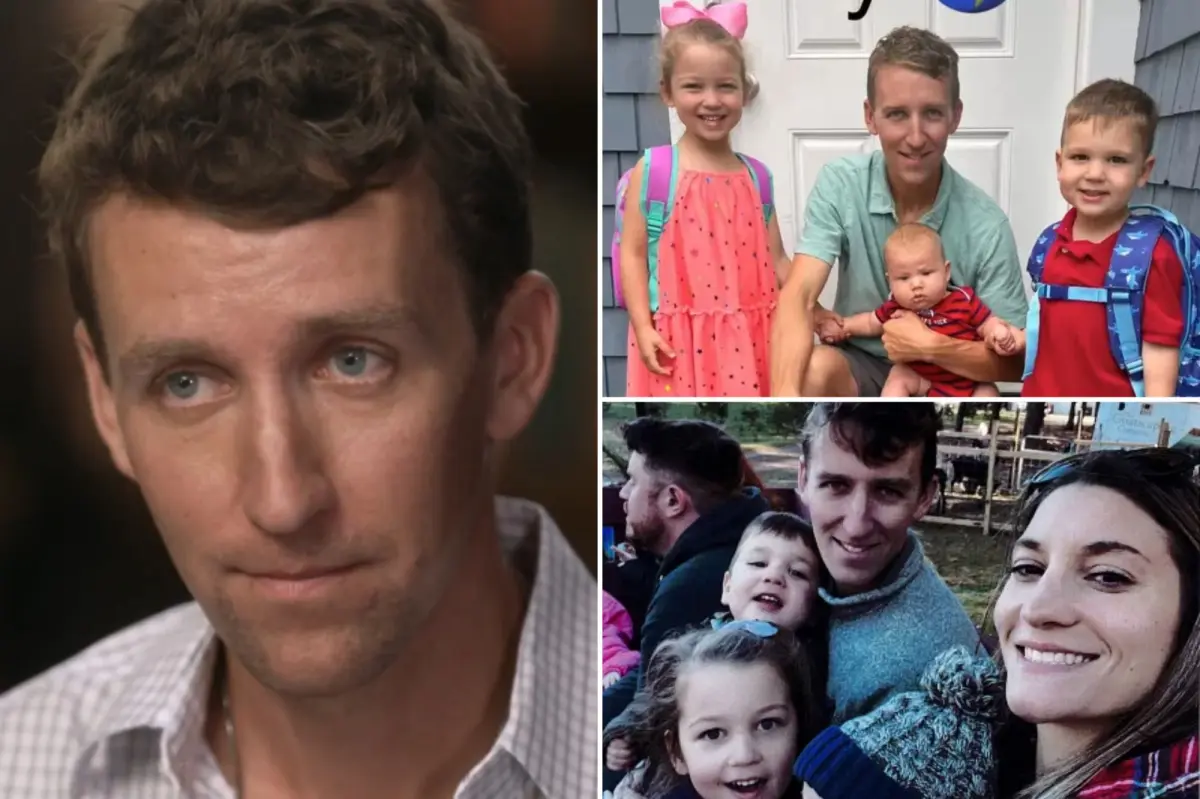
Patrick Clancy is speaking out for the first time since the devastating loss of his three young children, sharing the deeply personal journey of how he has attempted to survive an unimaginable tragedy. In a recent appearance on 60 Minutes, the 36 year old father discussed the overwhelming nature of his grief and the specific therapeutic approach that allowed him to begin healing. His children, Cora, Dawson, and Callan, died in January 2023 at their family home in Duxbury, Massachusetts, in a case where his ex wife subsequently faced charges for their deaths.
During his conversation with correspondent Ross Douthat, Clancy described a specialized form of psychotherapy known as Eye Movement Desensitization and Reprocessing, or EMDR, as nothing short of a miracle. He explained that the process was often unpleasant because it required him to confront the very memories he had spent years trying to avoid. By facing these traumas head on rather than pushing them away, Clancy found that he could finally start processing the events in a way that felt manageable.
The results were profound for Clancy, who noted that the terrifying nightmares and episodes of waking up screaming mostly ceased after completing his sessions. While traditional talk therapy focuses on verbalizing experiences, EMDR utilizes bilateral stimulation such as guided eye movements or rhythmic tapping to help patients detach from the raw emotional intensity of a traumatic memory. For someone dealing with post traumatic stress disorder, this method aims to transform how a memory is stored in the brain so it no longer feels like an active threat.
Though some may find the technique unusual, EMDR is widely recognized by global health organizations including the World Health Organization and the American Psychological Association. It has gained further public visibility recently through high profile figures like Prince Harry and Miley Cyrus, who have both credited the therapy with helping them navigate their own past traumas. For Patrick Clancy, however, the benefit was more than just clinical; it provided a critical lifeline during one of the darkest periods of his life.